Inn
September 2026
A photograph from the Engadin that became a book cover, and what it carries.
It’s safe to say the Engadin is one of my favourite regions in Switzerland.
It sits in the southeast, in Graubünden, split into two halves: the Upper Engadin around St. Moritz and Pontresina, wide and open with its chain of lakes, and the Lower Engadin towards Scuol, narrower and greener, where the Swiss National Park is also located.
Romansh is still spoken there, a language with Latin roots. The architecture, the food and the place names all feel closer to the southern side of the Alps than to the rest of German-speaking Switzerland. Maybe that’s part of why it feels somehow more homey than other parts of the country.
Whatever the reason, it’s a place I’ve been lucky to spend several seasons in, through Hotel Nomad, because of family, or simply out of a personal desire to explore. And lately it has come to occupy a particular place in my life.
This summer, I spent a stretch of time immersed in the region, and that’s when I came to understand the River Inn.
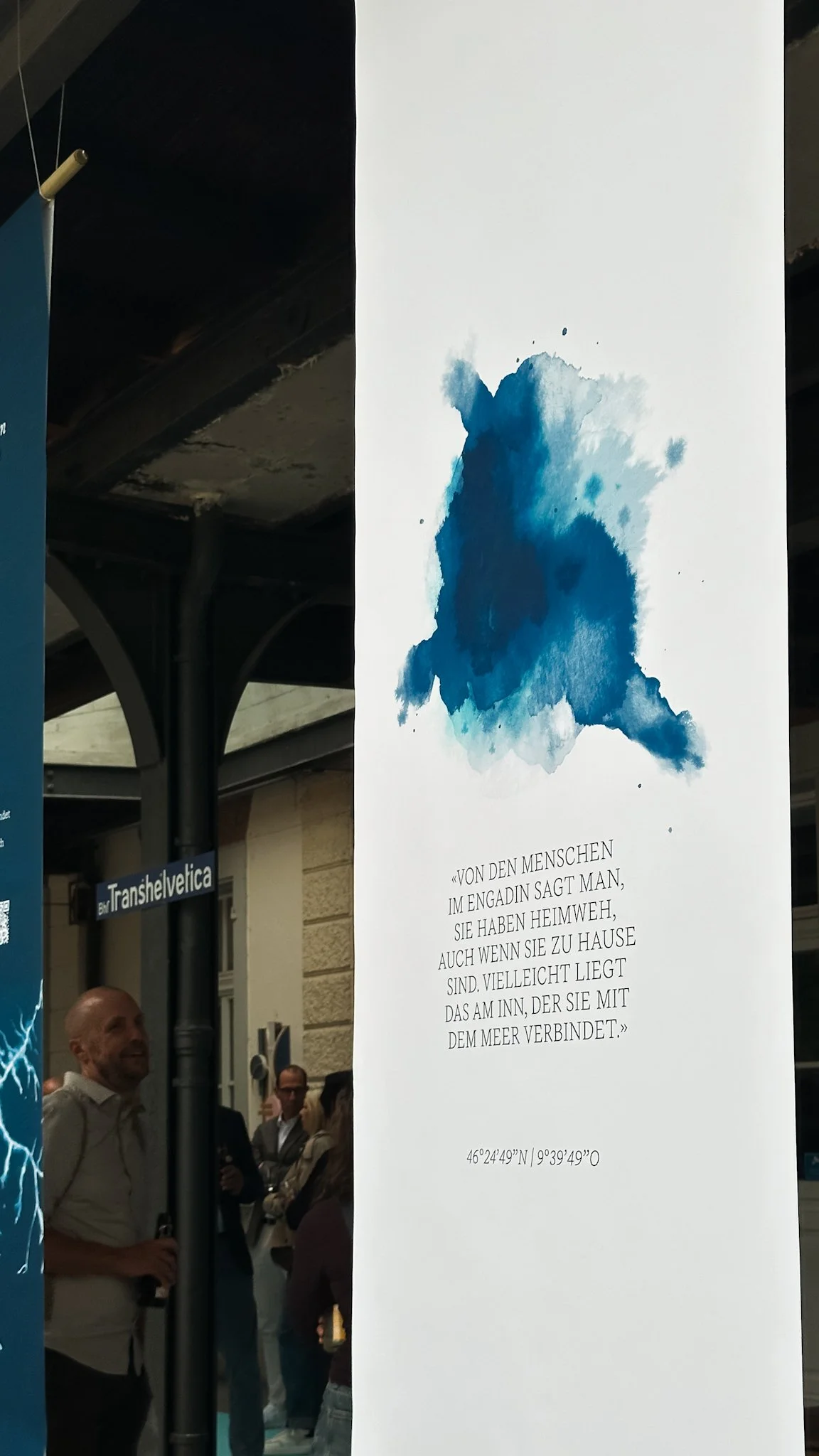
I had seen it many times, but never connected the dots. The Inn is young here, and it links the villages of the valley one after another, from Maloja to Martina. And it keeps going, out of Switzerland, through Austria and Germany, until it meets the Danube at Passau and, eventually, the Black Sea. A vein running from the Alps all the way to the salty water.
If you know me, you know what water and the ocean mean to me. Clarity. A sense of freedom. What Wallace J. Nichols called the Blue Mind. Making that connection over the past months has only deepened my feelings for this valley.
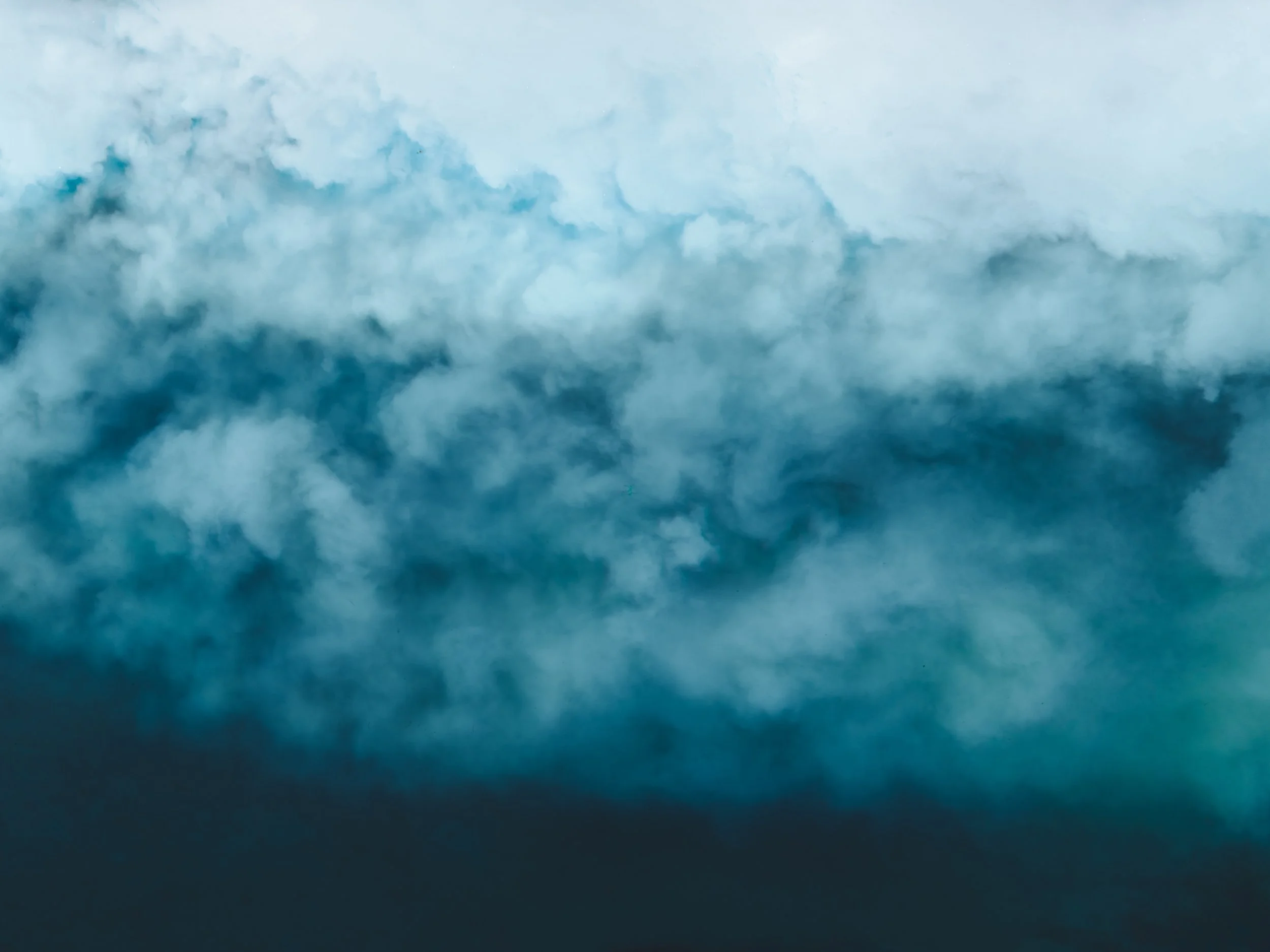
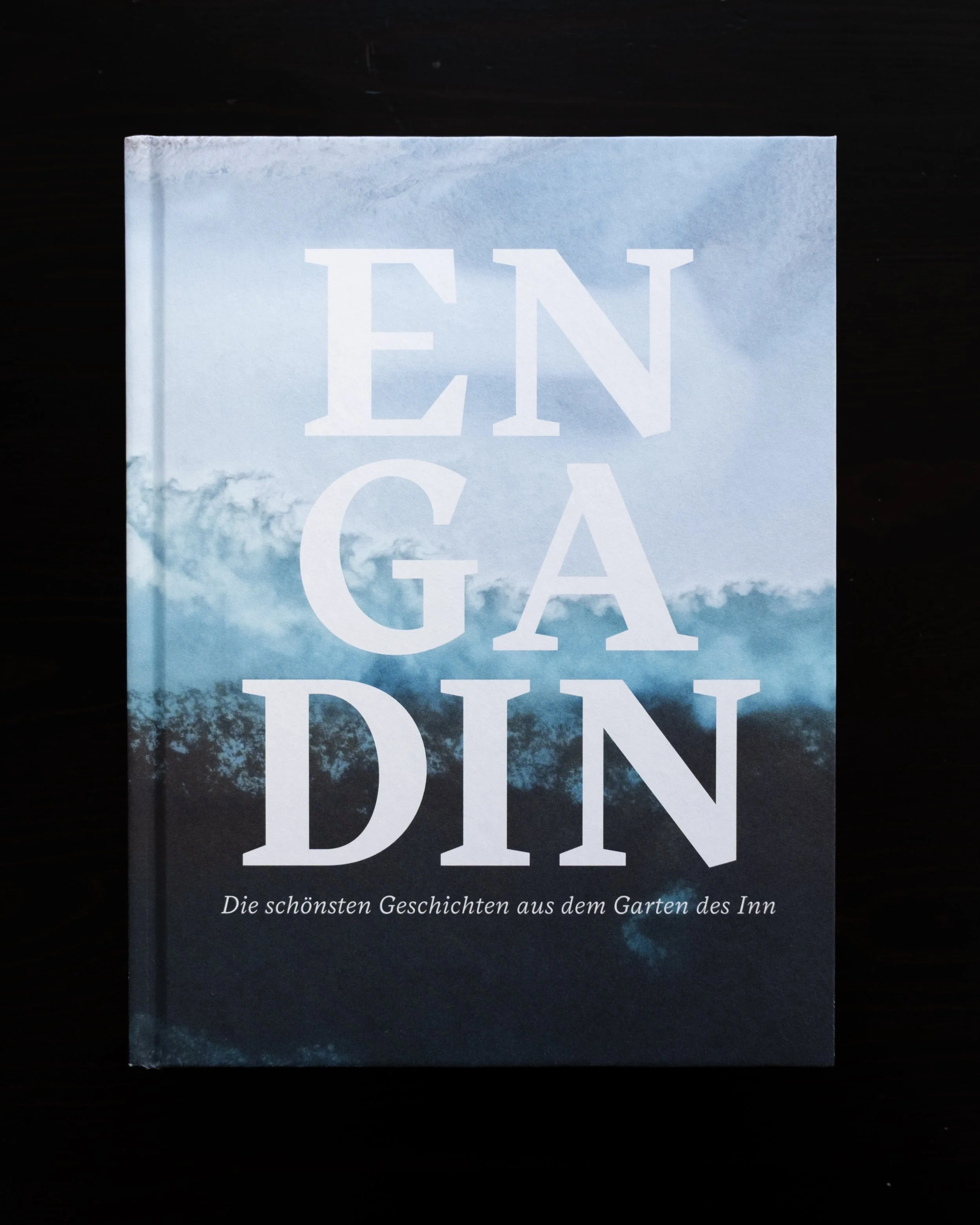
There’s one specific spot, in the floodplains between Samedan and Bever, where the Flaz Vegl meets the Inn. Milky, pale meltwater running into clear blue, the two braiding together for a while before becoming a single flow. That’s the photograph on the cover.
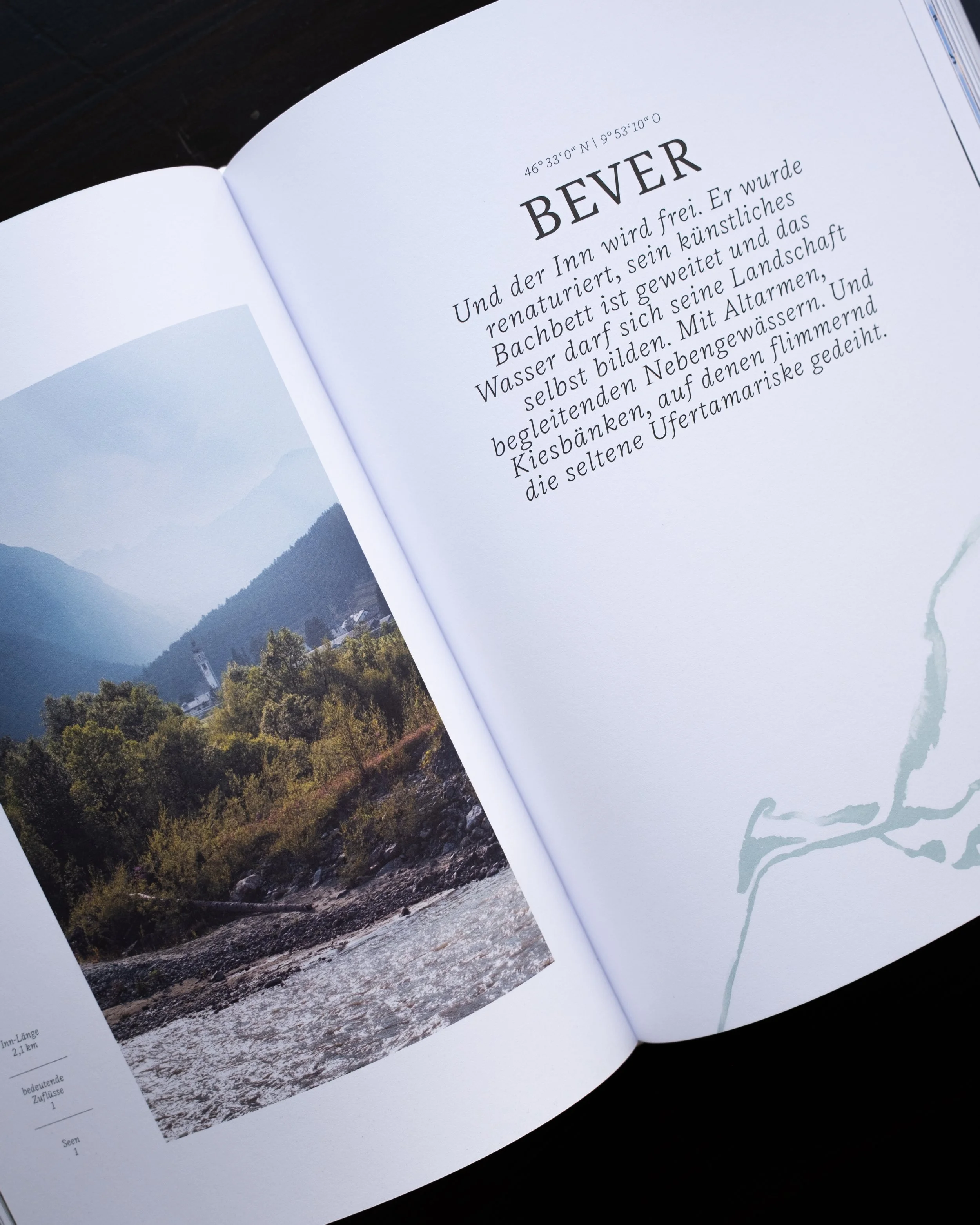
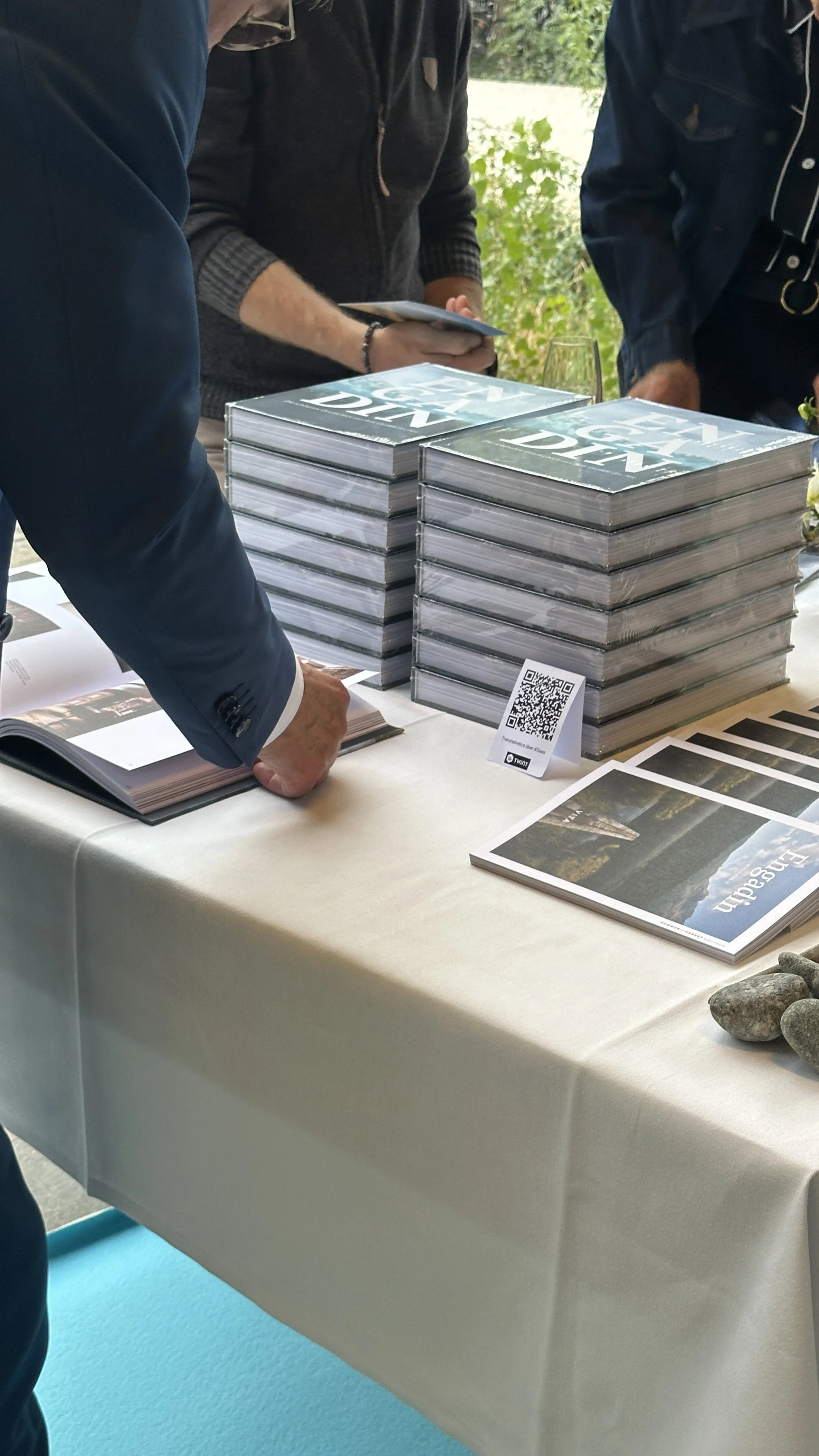
The book gathers more than seven years of stories about the region - people, sport, food, landscapes - written by various writers and documented in images by different photographers, brought together by Transhelvetica and the Engadin Tourism. It’s a collective work of documentary art, all connected by the Inn, beautifully illustrated by the artist Silvan Borer. (Interested in the book? You can buy it here.)
On a personal note, this carries something deeper too. The photograph was taken less than a week after my mother passed away. She loved water and the ocean as well, and she was probably the closest person to me, the one who knew me the most.
A month after the photograph was taken, her ashes drifted out into the ocean and the wind.
To work with something I love, to be outside photographing people and places, and to tell stories in images and words has always been a dream. She was the one who kept telling me it was possible. And apparently, it is. So this one is also for her, who always believed.
While working through all of this, my sister, the artist kalina juzwiak | kaju , remembered a poem often attributed to Kahlil Gibran that fits it well.
Becoming the Ocean - a poem often attributed to Kahlil Gibran
“It is said that before entering the sea
A river trembles with fear.
She looks back at the path she has travelled,
from the peaks of the mountains, the long winding road crossing forests and villages.
And in front of her, she sees an ocean so vast, that to enter there seems nothing more than to disappear forever.
But there is no other way.
The river can not go back.
Nobody can go back.
To go back is impossible in existence.
The river needs to take the risk of entering the ocean because only then will fear disappear, because that’s where the river will know it’s not about disappearing into the ocean, but of becoming the ocean.”